

Purple Nectar - Espresso
Violet Nectar is a silky, jammy coffee with a profile of jammy stone fruits that remind us of plums, jammy figs and sprite soda. We've profiled this coffee for espresso where we feel this one best excels. Our first year working with the Buncho washing station, we're excited to feature this honey 74158.
250g
Purple Nectar - Espresso
September Coffee Roastery
154 Iber Rd
Unit 9
Stittsville ON K2S 1E9
Canada
- Variety: 74158
- Country: Ethiopia
- Region: Bensa
- Process: Honey
- Altitude: 1950 – 2200 MASL
- Washing Station: Buncho
- Roast Level: Light - Medium
 In the cup
In the cup we get sweet jammy fruits like plums, figs and dark berries. This cup has a balanced acidity reminding us of lemon lime soda and a sweetness similar to chocolate. This coffee is profiled for espresso.
 Funky
Experimental
Funky
Experimental
 About The Producer
The Buncho Washing Station is located in the Shantawene kebele or Village and is part of the Bensa area, in Sidama, Ethiopia. Managed by Asefa Dukamo Korma, the site sits at an elevation of 1,920 – 2,020 m.a.s.l, high up in the beautiful mountains of Sidama, and is dedicated to producing Washed, Honey, Natural and Anaerobic processes. More than 800 farmers from the region contribute with their cherries in this site, mostly with 74158 Variety.
 Processing
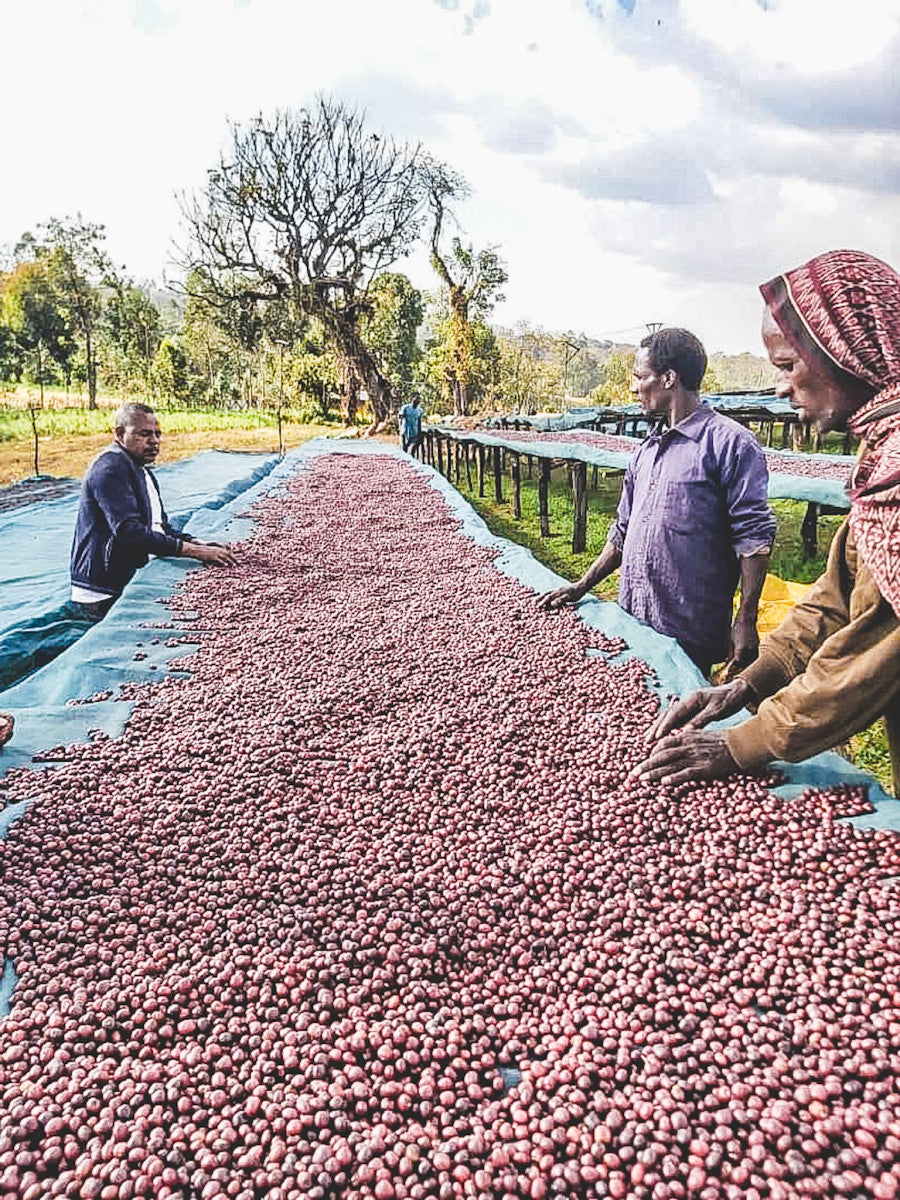
Once the cherries arrive at the Buncho Station, they are placed in water for sorting and removing floaters. The cherries are then de-pulped and laid to dry with its mucilage on raised African beds. To ensure an even drying, the parchment is constantly moved each day, taking 12-15 days, depending on the weather, until reaching the desired humidity.
 Variety
Landrace is an umbrella term that refers to all the coffee varietals endemic to Ethiopia. As believed to be the birthplace of coffee, the trees have been growing and cross-breeding for centuries in this country. As a result, today, there are numerous sub-varietals with some common genetics but slightly different behaviour and taste. Relatively recently, in the last few decades, there has been an organized effort to research and identify different endemic varietals growing in Ethiopia by name, disease resilience and yield production.
 Transparency
 We Paid
 Roasted Costs